

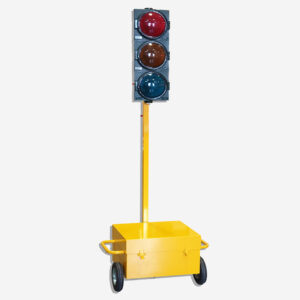

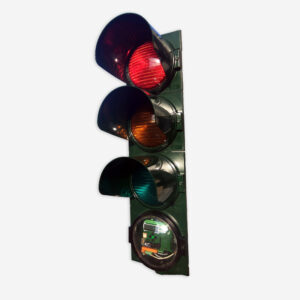
SMC MOBILE
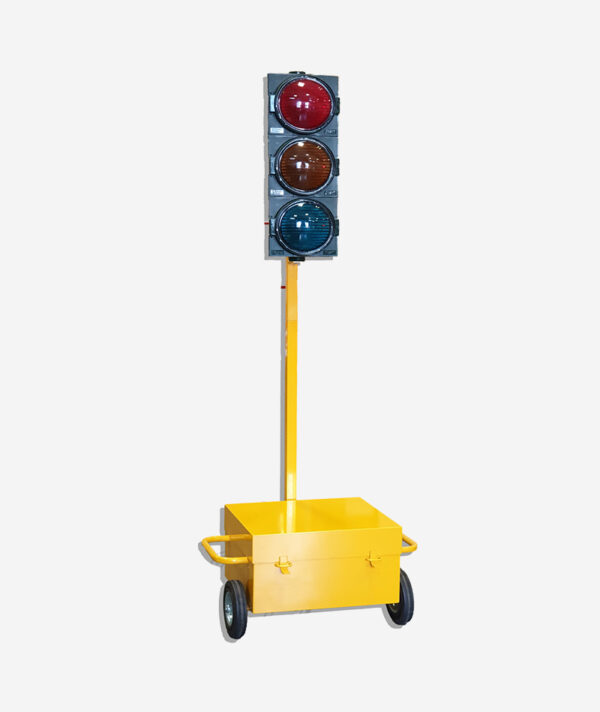
Portable Construction Traffic Light
SMC is a traffic light device designed for situations requiring a temporary installation for alternating one-way traffic, intersections, pedestrian crossings, work vehicle exits, roadworks, and similar scenarios.
It is designed to offer maximum flexibility and ease of use, meeting the needs of even the most demanding users.
- GENERAL FEATURES
GENERAL FEATURES
- Up to 4 selectable traffic signal groups
- High precision in isolated mode, maintaining synchronization for up to one month on alternating one-way streets
- Non-communicating by default
- Multilingual menu
- Dimming function
- Optional wired connection for communication between 4 controllable groups
- Expandable via Arduino Shield connector
- Multiple traffic light programs configurable based on time and external events
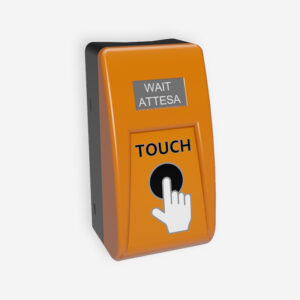
- Optional pedestrian button and vehicle radar sensor
- Optional GPS for unlimited synchronization between 2 autonomous and isolated groups
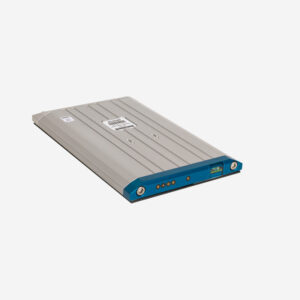
- Optional radio module for communication between 4 groups up to 1000 meters
- I/O module: 2 digital inputs and 2 digital outputs allow SMC to communicate with external devices
- Lamp monitoring system to detect if any signal becomes faulty
OPERATING MODES
• Isolated mode: Designed for use on alternating one-way streets, where the two groups do not communicate. Once started together, a high-precision quartz ensures synchronization between the two controllers. If available, GPS can be activated from the menu for absolute precision between the two traffic lights.
• Wired mode: Communication between 2/3/4 groups via RS485 standard to manage radar, pedestrian buttons, time-slot changes, and synchronization, all configurable through an app.
• Radio mode: By adding the optional radio module, the same functions as wired mode are available, but wirelessly up to 1000 meters.
• Spot mode: In this mode, the traffic lights remain in a fixed green or red state and, in response to an external event (radar, pedestrian button, I/O), execute a traffic cycle before returning to the preset starting state.